
Glossary · Business models

What do B2B and B2C mean in travel?

B2B (business to business) travel means selling to other travel companies, such as agencies and tour operators, who resell to their own clients. B2C (business to consumer) means selling directly to the traveller.

One package, two pricesExample
Package cost
800 per person
B2B net price
920 to partner agencies
B2C price
1,050 on the public website
Seats behind both
The same 30 per departure

The package is the same. Price and payment terms depend on who is buying.

How it works

A B2B sale is usually priced at a net rate, paid on account or by deposit, and made through a partner login or a request by email. The buyer adds its own markup. A B2C sale is priced at the public selling price, paid by the traveller at booking, and made on a public website or over a counter.

Many travel businesses do both. A DMC may sell to overseas operators and also take direct bookings online. The two channels need different prices, different payment terms and different screens, but the same hotels, departures and seats sit behind them, so both should draw on one inventory.

Side by side

B2B vs B2C

B2B compared with B2C
B2BB2C
BuyerTravel agencies, tour operatorsThe traveller
PriceNet rate, buyer adds a markupPublic selling price
PaymentCredit terms, deposit or walletPaid at booking
ChannelAgent portal, email, APIPublic website
BuyersFewer, larger, repeatMany, mostly one-off

Enity B2C · Connected travel website

How Enity handles it.

Enity B2B handles B2B and B2C requests in one flow. Enity B2C is the public website that syncs live with it, and it includes a B2B agency portal where sub-agents log in and book.

  • New and updated packages appear on your website as soon as they are saved in B2B
  • B2C enquiries and bookings flow directly into your B2B reservation system as new requests
  • When a departure fills up, your website reflects it immediately
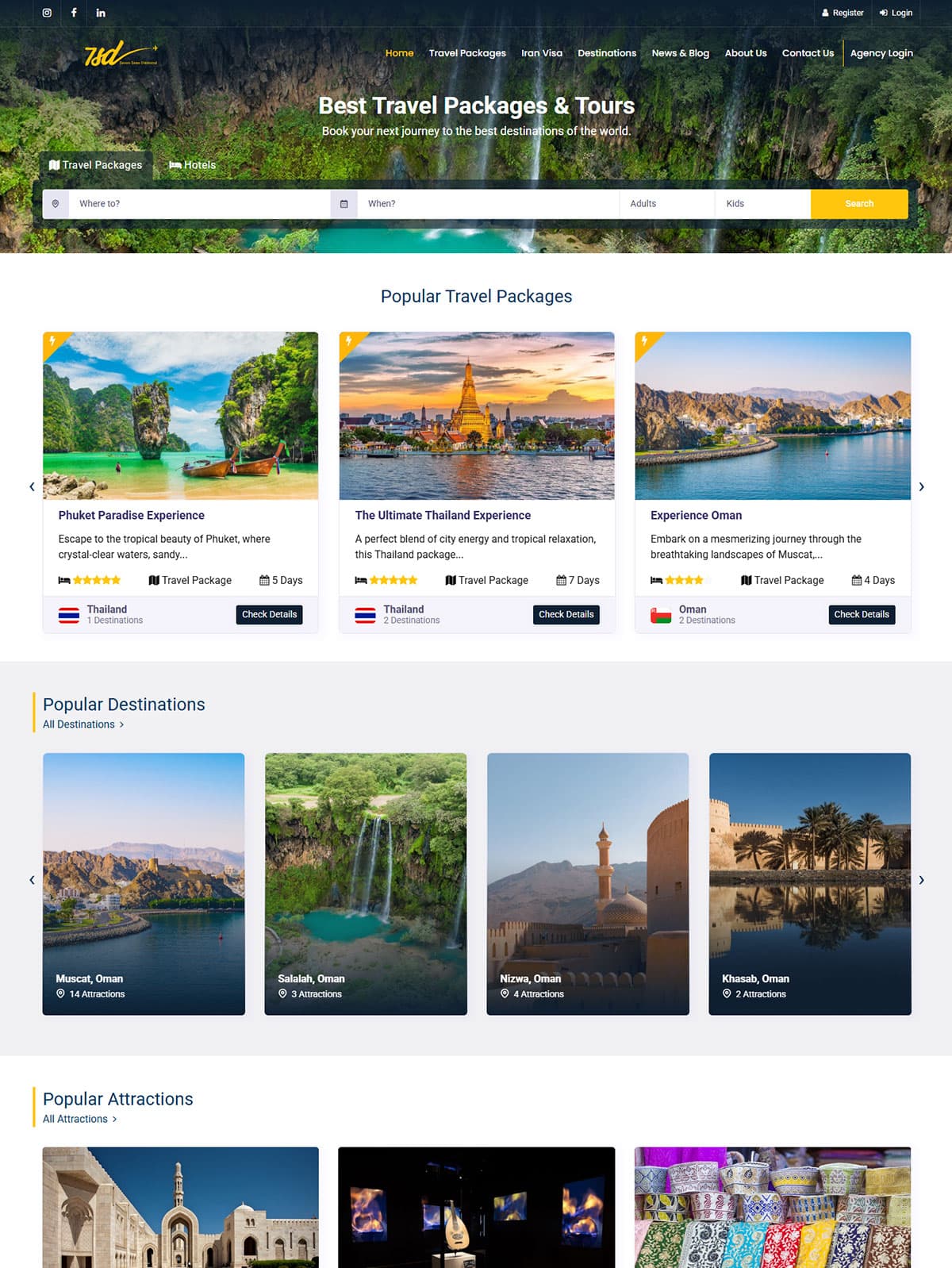
A travel agency website built on Enity B2C with a package search, popular travel packages and destinations.

Articles

See it in practice.

All articles
  • B2B Travel Portal: How Travel Agencies Choose the Right One

    What to look for in a B2B travel portal before you move your bookings to it: the services it really covers, how you pay, group requests, after-sale support, and when a website or API is worth adding.

  • How to Add Flights to Tour Packages Through a B2B Booking Panel

    A ground-only package sends your customer elsewhere for the flight. How to add B2B flights to your packages, price them with your own markup and handle groups, with a worked example.

  • Sell Flights, Hotels, Visas and Tours From One B2B Travel Portal

    A small agency can sell flights, hotels, visas, tours and group trips from one B2B panel and one wallet. What to add first, when a website or API makes sense, and what it costs to start.

Related terms

All glossary terms
  • Business models

    Sub-agent

    A sub-agent is a travel agency that sells another company’s travel products, such as a tour operator’s packages or a consolidator’s flight tickets, under an agreement with that company instead of contracting suppliers itself.

  • Pricing and finance

    Net rate

    A net rate is the price a supplier charges a travel company, with no commission included.

  • Business models

    Tour operator vs travel agency

    A tour operator creates travel products by contracting hotels, transport and services and combining them into packages.

Book a demo and explore how.

See how your entire operation can run in one clear system.